How Cats See the World: A Feline Perspective
Cats, those enigmatic creatures, experience the world quite differently than we do. Their visual system, honed by millions of years of evolution as crepuscular hunters, offers a fascinating insight into how they perceive their surroundings. Understanding feline vision helps us appreciate their behaviors and better understand their needs.

One of the most striking differences is their superior night vision. Cats possess a higher density of rod cells in their retinas compared to humans. Rod cells are responsible for detecting light and are crucial for vision in low-light conditions. This allows cats to see much better in the dark than we can, a significant advantage for nocturnal hunters. Vision is a key aspect of their survival.

The Tapetum Lucidum: Nature's Night Vision Amplifier
Cats possess a reflective layer behind the retina called the tapetum lucidum. This layer reflects light back through the retina, effectively amplifying the available light. This is what causes the characteristic eye shine we see in cats at night.  This adaptation is crucial for their hunting prowess in dim light.
Color Vision and Depth Perception
While cats can see colors, their color vision isn't as vibrant as ours. They are dichromats, meaning they have two types of cone cells (compared to our three), making them less sensitive to red and green hues. Their color perception is more muted, leaning towards blues and greens. This doesn't impede their ability to hunt effectively, as their prey's movements are more important than precise color identification.
Their depth perception is also slightly different. While they have binocular vision (using both eyes simultaneously), their field of vision is wider than ours, providing a panoramic view of their surroundings. This allows them to detect movement from the periphery, a key advantage when stalking prey. 
Motion Detection: A Hunter's Instincts
Cats possess exceptional motion detection capabilities. Their visual system is highly attuned to even slight movements, which is critical for detecting and catching prey.  This explains why they may seem fascinated by moving objects such as laser pointers or dangling toys.

Visual Acuity and Focus
While their night vision is exceptional, a cat's visual acuity—their ability to see fine details—is less sharp than ours at a distance. They can see objects clearly at close range, which is essential for hunting and grooming.

Understanding Feline Visual Limitations
It's important to note that while cats have adapted remarkably to their environment, they do have some visual limitations. They may struggle to perceive things that are stationary or not moving, particularly at a distance. Their relatively poor color vision compared to humans, and their less sharp distant vision, means the world appears different to them than it does to us. 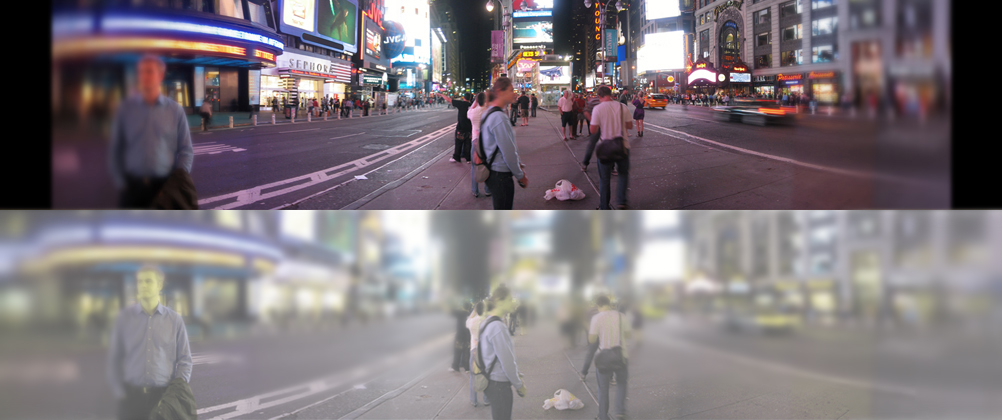

Summary
- Cats have exceptional night vision due to a high density of rod cells and the tapetum lucidum.
- Their color vision is dichromatic, with less sensitivity to red and green.
- They possess superior motion detection and a wide field of vision.
- Their visual acuity is sharp at close range but less so at a distance.
- Understanding these unique aspects of feline vision allows for better interaction and care.
In conclusion, a cat's view of the world is a fascinating blend of enhanced night vision, exceptional motion detection, and a unique perception of color and distance. Understanding how cats see helps us appreciate their remarkable adaptations and provides valuable insight into their behavior and needs. By acknowledging the differences between our visual worlds, we can enrich our relationships with our feline companions and better understand their perspectives.


Comments
Post a Comment